Key Takeaways:
-
Look beyond price. A qualified steel service center should offer proven quality systems, processing capabilities, and dependable supply performance.
- Ask strategic questions. A supplier’s communication, inventory management, and long-term planning often reveal more than a price quote alone.
- Verify industry certifications. Certifications such as IATF 16949 and A2LA accreditation demonstrate a commitment to quality, consistency, and continuous improvement.
As manufacturers lock in 2027 supply agreements, knowing how to qualify a steel service center has become one of the most consequential decisions a procurement team makes. Yet many buyers still choose on price per ton and skip the criteria that show whether a supplier can perform under pressure, year after year. The cost shows up later as quality escapes, missed ship dates, and expensive spot buys when the market tightens. Pricing still matters, but quality systems, certifications, processing capability, and supply chain reliability decide whether a partnership holds up. This guide lays out the certifications to verify, the audit criteria to apply, and the questions to ask before you sign, so you enter 2027 with a supplier you have vetted, not one you hope will perform.
Why It Pays to Qualify a Steel Service Center Carefully
Recent years of mill outages, freight disruptions, and price swings have shown how much a production schedule depends on its steel supplier. As a result, selecting a steel supplier has become a strategic business decision rather than a simple purchasing exercise.
A dependable flat-rolled steel supplier should help manufacturers navigate market fluctuations, maintain production schedules, and consistently meet quality expectations. When disruptions occur, strong supplier relationships often make the difference between staying on schedule and experiencing costly delays.
Companies preparing for long-term purchasing agreements should also consider how their suppliers support future growth. The right partner will continue investing in technology, quality processes, and inventory management to meet changing customer demands.
If your team is in the middle of steel procurement planning for 2027, supplier qualification deserves as much attention as pricing and lead times.
Steel Service Center vs. Distributor: What’s the Difference?
One of the first questions buyers should answer is how a steel service center differs from a distributor. While both provide steel products, their capabilities can vary significantly. A steel distributor primarily purchases and resells material with limited value-added processing.
A steel service center, on the other hand, typically offers:
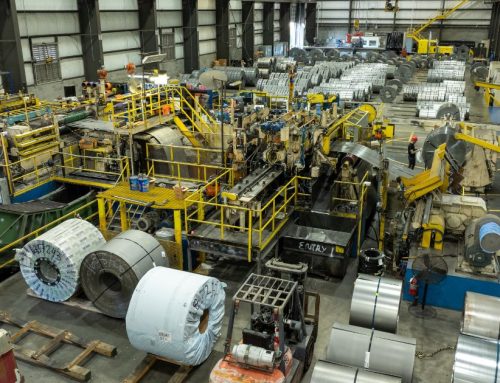
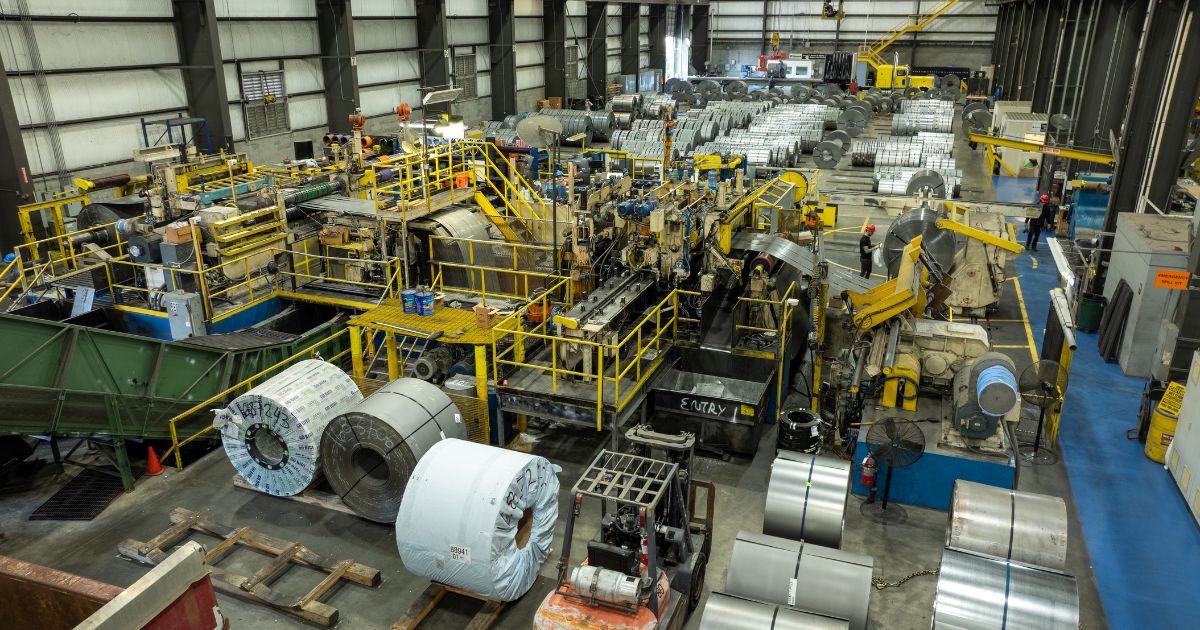
- Coil slitting and cut-to-length processing
- Pickling and tension leveling for cleaner surfaces and flatter strip
- Inventory management programs
- Precision quality inspections
- Material traceability
- Custom packaging and logistics
- Technical support throughout production
For manufacturers with ongoing production requirements, these additional services often improve efficiency while reducing operational risk. Modern service centers also continue investing in automation, inspection technology, and precision processing.
Steel Service Center Certification Requirements: What to Verify
Supplier certifications provide independent verification that a supplier maintains its quality systems consistently.
Although certifications should never replace a thorough supplier evaluation, they offer valuable insight into how an organization operates. Ask for current certificates, confirm that each one covers the specific facility that will ship your material, and check the expiration dates.
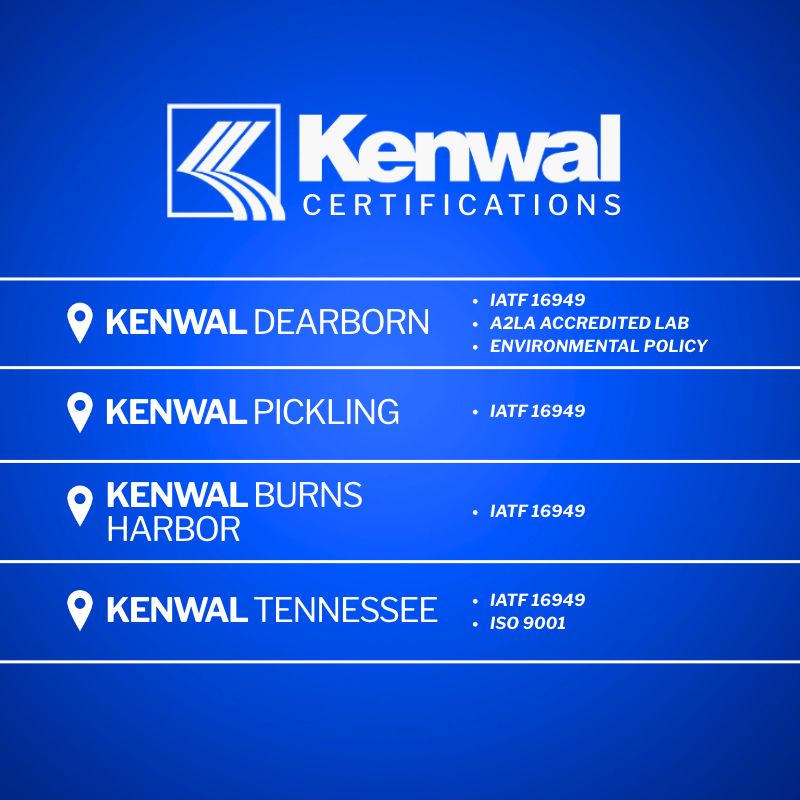
IATF 16949: Manufacturers serving the automotive industry should strongly consider an IATF 16949 steel supplier. This internationally recognized quality management standard focuses on defect prevention, process control, and continuous improvement throughout the automotive supply chain. Working with an IATF-certified supplier helps reduce quality risks while supporting customer-specific requirements. Learn more about the standard through the International Automotive Task Force and Smithers‘ overview of major IATF 16949 requirements.
Environmental Management (ISO 14001): Many OEMs now ask suppliers to show how they manage environmental impact as part of their own sustainability commitments. ISO 14001 is the most widely recognized framework for an environmental management system, and some buyers require it outright. If environmental performance is part of your sourcing criteria, ask each supplier how it documents, measures, and audits its environmental program, and whether it holds or is pursuing ISO 14001 certification. Additional information is available from the ISO 14000 family of standards.
A2LA Accreditation: Testing and inspection capabilities are equally important when qualifying suppliers. An A2LA accredited steel supplier has demonstrated technical competence through independent laboratory accreditation. Accreditation confirms that the lab tests material to recognized standards, which gives buyers greater confidence in product quality and traceability. Ask to see the scope of accreditation, too; it lists exactly which tests the lab is accredited to perform. Learn more through A2LA.
What Should Be Included in a Steel Supplier Audit?
Even certified suppliers deserve a structured review against consistent steel supplier audit criteria. Rather than focusing on a single area, procurement teams should examine the supplier’s overall operation.
Consider reviewing:
Quality Management
- Documented quality procedures
- Material traceability
- Corrective action process
- Calibration and inspection programs
Processing Capabilities
- Slitting tolerances
- Cut-to-length accuracy
- Packaging methods
- Equipment maintenance schedules
Inventory and Supply Chain
- Safety stock programs
- Inventory visibility
- Multiple sourcing strategies
- Forecasting support
- Facility locations relative to your plants (freight cost and lead time)
Customer Service
- Dedicated account management
- Technical assistance
- Communication during supply disruptions
- Order accuracy and responsiveness
A structured audit provides a clearer picture of whether the supplier can support a long-term partnership instead of simply filling purchase orders.
Questions to Ask Before Signing a Long-Term Steel Supply Contract
Before entering a long-term steel supply contract, ask questions that extend beyond price and availability.
Some of the most valuable conversations include:
- How do you maintain consistent inventory during market disruptions?
- Which certifications do you hold, and when was each one last audited?
- How is material traceability managed?
- What investments have you made in processing technology?
- How are quality issues documented and resolved?
- Can you support future production growth?
- What reporting or inventory visibility tools are available to customers?
- What has your on-time delivery rate been over the last 12 months?
- Which facility will ship our material, and how does its location affect lead times and freight?
These discussions often reveal how a supplier approaches partnership, communication, and continuous improvement.
Evaluating Long-Term Value Instead of Short-Term Cost
The lowest price does not always deliver the lowest total cost. Buyers comparing suppliers should also consider other factors such as processing capabilities, inventory management, and long-term reliability.
For example, inconsistent quality can lead to production delays, increased scrap, expedited freight, and customer complaints. Those expenses frequently outweigh small differences in material pricing. That is why buyers should evaluate suppliers on total value rather than unit price.
Key considerations include:
- Consistent quality
- Reliable delivery performance
- Processing accuracy
- Inventory availability
- Technical expertise
- Continuous improvement initiatives
- Long-term financial stability and ownership continuity
A supplier that consistently performs well across these categories is more likely to support business growth over time.
Ownership deserves a closer look than many buyers give it. Ask how long the company has operated under its current ownership and how leadership plans for continuity. A change in ownership can bring new pricing policies, account teams, or priorities in the middle of a contract.
For a closer look at how a documented quality program separates one supplier from another, review what a steel service center’s quality systems should include.
Building a Stronger Supplier Relationship for 2027 and Beyond
Supplier qualification should not end after the first purchase order. Successful partnerships grow through ongoing communication, regular performance reviews, and shared planning.
As procurement strategies continue evolving, manufacturers benefit from suppliers that invest in technology, quality systems, and operational excellence. Those investments show up as better consistency, greater transparency, and stronger long-term performance
When you qualify a steel service center with the same rigor you apply to your own quality systems, you reduce supply chain risk and give your 2027 production plan a dependable foundation.
FAQ — Qualifying a Steel Service Center
Your 2027 steel partner should pass every test on this list.
 Kenwal Steel holds IATF 16949 certification at its U.S. facilities, runs an A2LA-accredited lab in Dearborn, and has processed flat-rolled steel for manufacturers since 1947. With facilities in Dearborn, Michigan; Burns Harbor, Indiana; Lebanon, Tennessee; and Ontario, Canada, Kenwal keeps material close to your production.
Request a quote to start the qualification conversation before your 2027 contracts close.