Key Takeaways:
- Production risk often starts with poor supplier control. Quality escapes, processing variation, and unreliable delivery quickly cascade into downtime, containment, and lost throughput.
- The right supplier reduces risk through disciplined quality, processing, and logistics systems. Traceability, controlled coil processing, robust packaging, and consistent delivery performance and logistics discipline separate dependable partners from liabilities.
- Precision processing and schedule-driven execution improve supply chain control. Strong product capabilities, packaging standards, and logistics support consistent quality and on-time performance.
Steel coil supplier selection becomes critical when schedules are compressed and production lines cannot afford disruption. Too often, quality escapes and processing variation are introduced, triggering line stoppages and costly containment. As a result, supplier evaluation is increasingly treated as a risk-reduction exercise rather than a simple sourcing task. Examine the decision points that separate a dependable local partner from a logistical liability. Additionally, review availability across grades, processing capabilities, quality protocols, and delivery performance to support more informed purchasing decisions.
Supplier Selection Starts with Coil Quality Assurance
Quality is the cost of admission, and traceability serves as the insurance policy. It begins with confirming that every processed coil can be traced back to its heat lot. Mill documentation and internal processing history should also be verified, as both are crucial when issues arise. When defects such as edge waves or surface irregularities occur, a root cause analysis must be conducted.
A strong supplier screening approach can be achieved by requesting their “quality stack” explained in plain terms.
- Adherence to standards: How are recognized standards and customer specifications maintained? This includes chemistry, mechanical properties, surface quality, and flatness. Frameworks such as ASTM steel standards exist to reduce ambiguity, simplify purchase requirements, and streamline claim negotiations.
- Lab competence: Are competent labs operated internally, or are accredited facilities partnered with? ISO/IEC 17025 certification demonstrates confidence in lab results, which can be critical when disputes depend on data integrity.
- The containment playbook: Leading suppliers clearly outline sample retention practices and trace-back speed. Their corrective action process should also be transparent, without overwhelming you with jargon.

Custom Coil Processing and Delivery Reliability Make or Break Your Schedule
A hot-rolled steel coil supplier, cold-rolled steel coil supplier, or galvanized steel coil distributor can appear identical on paper. The difference lies in the execution after the purchase order is placed. The metal must run through custom coil processing and arrive ready to feed your line.
Pressure-test potential partners on three specific operational pillars. These are:
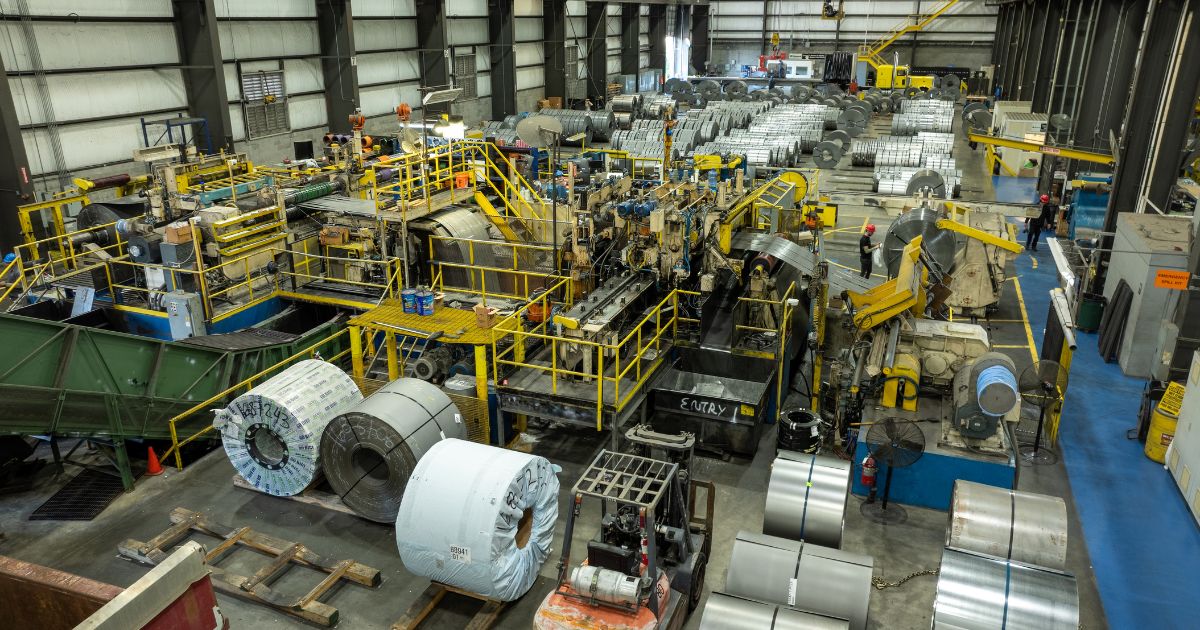
- The processing capability window: Verify the real processing capability window rather than accepting generic claims. For coil slitting and other processing steps, ask how the supplier controls setup variability. Critical factors include their strategy for knives and spacers, as well as tension management. Ask how they prevent telescoping or shape distortion. The goal is consistency. Rework and downtime occur regardless of perfect chemistry.
- Packaging as a quality standard: Packaging is integral to quality. Coil damage often stems from logistical issues such as banding failures or moisture exposure. Edge crush is another common risk during transit. The stakes are high enough that the U.S. DOT has explicit securement requirements for metal coils under 49 CFR 393.120. The FMCSA provides guidance on cargo securement for these loads. Compliance is mandatory.
If your application is sensitive, make packaging requirements explicit. Define the rust prevention method and wrap type. Specify edge protection, skid requirements, and labeling practices clearly.
- A disciplined system for delivery performance and material control: Demand disciplined material control. It requires inventory visibility and realistic lead-time management. Suppliers must explain how they plan shipments, communicate changes, and recover from disruptions. Without this explanation, they are relying on hope rather than process.
Market outlooks also influence supply chains. Worldsteel’s October 2025 short-range outlook flags softness in developed markets in 2025 with a projected recovery in 2026. These conditions can amplify swings in supply behavior.
A reliable supplier integrates processing, packaging, and logistics into a single control plan. Your plant experiences these elements as a unified service.
Kenwal Steel Aligns with High-Standard Procurement
Finding a supplier that meets the rigorous controls outlined above requires due diligence. Kenwal Steel operates as a flat-rolled service partner built on precision processing and delivery execution. Their approach combines the technical capabilities of a major service center with a relationship-driven culture.
- Comprehensive product coverage: Kenwal’s steel products page provides details on its extensive inventory. This includes hot-rolled, pickled hot-rolled, and cold-rolled options. Galvanized and electrogalvanized grades are also available alongside advanced high-strength steels. This range supports manufacturers managing multiple programs without the need for constant re-qualification.
- Damage prevention: Shipment readiness is a priority. Their steel coil packaging capability serves as a practical match for surface-critical workflows. In this model, packaging functions as a central component of the quality plan.
- Schedule protection: Reliable delivery performance requires a robust operational backbone. Kenwal highlights their logistics access and delivery planning in their material control & delivery overview. This ensures the supply chain remains fluid.
- Process expertise: Kenwal shares insights on delivery planning, material control, and supply chain coordination. This context is helpful for teams aligning supply with production requirements and inventory strategies.

The Next Step
Take action. Score your current partners against these standards. If gaps appear in reliability or quality, Kenwal stands ready to be evaluated as your primary steel coil supplier.