Key Takeaways:
- Steel grade selection is often oversimplified, leading engineers to prioritize strength alone while overlooking critical factors like formability, durability, lifecycle cost, and supply consistency, resulting in costly performance and production issues.
- Lifecycle cost matters more than material price. True value comes from evaluating corrosion resistance, fatigue life, processing impact, tooling wear, and long-term performance, not just cost per ton.
- Successful material selection depends on aligning metallurgical properties with real-world manufacturing conditions, ensuring consistency, reliability, and performance at scale.
A comprehensive steel grades guide must go beyond listing alloys and instead evaluate how strength, durability, and cost interact under real-world industrial conditions. Because material selection directly impacts safety, longevity, and fiscal performance, engineers must weigh loading demands, forming requirements, corrosion exposure, lifecycle cost targets, and supply reliability. Ultimately, there is no single best steel for industrial use. There is only the grade that best aligns with the application’s technical and economic constraints.
How Engineers Compare Steel Grades: Strength, Performance Envelope, and Risk
A meaningful steel strength comparison goes beyond yield and tensile values. Engineers must define the full performance envelope. Elongation, strain hardening, notch toughness, and fatigue resistance must be evaluated. These properties govern behavior under static loads, cyclic stress, and forming shock.
Meanwhile, modern design has shifted toward advanced high-strength steels (AHSS) and ultra-high strength steels (UHSS). Thinner sections can be used. Structural safety is maintained. As a result, strength-to-weight ratios are improved in automotive and heavy equipment applications.
Even so, higher strength creates processing tradeoffs. Formability is reduced as tensile limits rise. Weld zones become more heat-sensitive. Thus, steel selection is not a simple upgrade. Multiple variables must be balanced at once.
Additionally, strain-rate sensitivity must be considered in impact conditions. Structural investigations, such as NIST’s analysis of mechanical properties, demonstrate that strain rate, temperature, and microstructure fundamentally alter yield behavior under extreme loading conditions. Performance can be altered when these change.
Coil consistency cannot be assumed. Two coils may meet the same grade yet perform differently in forming or welding. Minor chemical variation can be introduced during production. For this reason, metallurgical control must extend beyond the specification sheet.

Finally, strength must be evaluated against structural codes. Organizations like the American Institute of Steel Construction (AISC) establish the design criteria that translate raw material properties into allowable stresses. The most defensible material decision is not necessarily “stronger is better,” but rather “strong enough, consistently available, and manufacturable at scale.”
Steel Durability and Cost: Lifecycle Value Over Material Price
Steel durability is a composite measure. It includes corrosion resistance, fatigue life, fracture toughness, and surface integrity. Engineers specifying durability are defining expected performance over the full service life.
Corrosion drives most material failure. Unprotected carbon steel degrades quickly in aggressive environments. Coated or weathering grades often reduce total ownership cost despite higher upfront pricing. Fatigue performance also depends on microstructural cleanliness and surface finish. Residual stress and inclusions can initiate cracks, which makes automated surface inspection technologies critical before fabrication.
A robust economic analysis includes:
- Yield loss: This refers to scrap rates during blanking or stamping.
- Tooling wear: Higher strength grades often accelerate die wear.
- Processing: These are costs for welding consumables and rework risks.
- Field performance: Considers warranty exposure and replacement frequency.
A steel cost guide should reflect total installed cost, not price per ton. Scrap rates, tooling wear, processing inputs, rework risk, warranty exposure, and replacement cycles all affect the equation. Availability must also be evaluated. Inconsistent supply introduces schedule risk in high-volume programs.
Sustainability now factors into durability decisions. Recyclability and embodied carbon influence compliance with standards supported by organizations such as the World Steel Association and the American Institute of Steel Construction. Strong engineering outcomes are achieved when lifecycle cost, performance stability, and long-term reliability are prioritized together.
From Theory to Execution
Selecting the right steel grade is only half the equation; the other half is execution discipline. This requires a partner who combines metallurgical expertise with rigorous supply chain logistics.
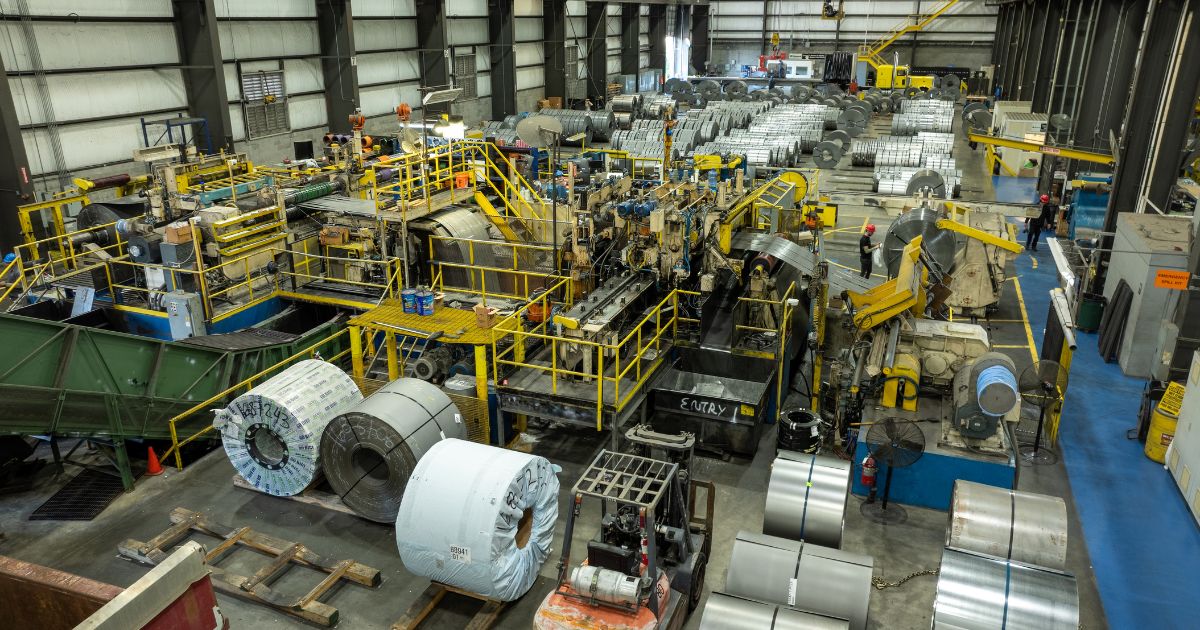
Kenwal Steel operates as a premier flat-rolled steel service center, supporting automotive, industrial, and OEM applications across North America. While the company maintains the scale to supply comprehensive carbon, coated, and AHSS inventories, it is defined by a distinct, family-oriented approach to business. This ownership structure allows for a level of warmth and responsiveness that is often lost in larger, transactional organizations.
The engineering team at Kenwal actively bridges the gap between design and production. These steel experts provide technical support for grade selection, ensuring that mechanical properties align with forming and welding requirements. Their high-end consulting capabilities are backed by industry-leading quality certifications and precision processing, including steel slitting designed to optimize yield.
For engineers in particular, understanding how a steel service center manages inspection and traceability is just as critical as understanding specific grade steel types. Kenwal’s protocols from surface inspection to consistency controls are built to remove downstream risk.
For a complete breakdown of capabilities, standards, and the Kenwal approach to industrial partnership download the Kenwal Steel Corporate Overview.
Don’t see the steel product you need? Kenwal works with engineers to source, process, and deliver the exact steel grade your application requires, reliably and at scale.

It’s Time to Compare Strength, Durability, and Lifecycle Cost with Confidence.
Consult with Kenwal Steel today and specify the right grade for your application before performance tradeoffs become production problems.
➡️ Ready to optimize your steel project? Contact us today to discuss your specifications and receive a custom quote.